

In a mobility bathroom, safety and accessibility are just as important as style. Wet floors, soap and condensation can quickly turn smooth surfaces into slip hazards, especially for people with reduced mobility, balance issues or joint pain.
Choosing the right non-slip tiles is one of the most effective ways to cut the risk of falls while keeping the room comfortable and easy to keep clean. Tile requirements also shift depending on whether you have a traditional shower enclosure, a wet room, or a full-level access walk in shower.
Gradients, drainage and texture all come into play. This guide explains how to choose suitable tile materials, finishes and slip ratings so your mobility bathroom is both attractive and reassuringly safe underfoot.
Why Tile Choice Matters in Mobility Bathrooms
Bathrooms combine water, hard flooring, tight spaces and frequent changes in position, all factors that increase the risk of slips, trips and falls. This risk becomes higher for people with reduced strength, slower reactions or difficulty balancing, which is why careful tile selection is so important in mobility bathrooms and accessible wet rooms.
Non-slip tiles are designed to provide more grip underfoot than standard glossy tiles, especially when surfaces are wet. A good tile choice can help prevent accidents, support independent bathing and reduce anxiety about moving around the room. It also affects how easy the space is to clean and maintain.
Textured tiles and suitable grout can reduce pooling water, while stain-resistant finishes make day-to-day cleaning simpler and help you keep the bathroom fresh and hygienic.
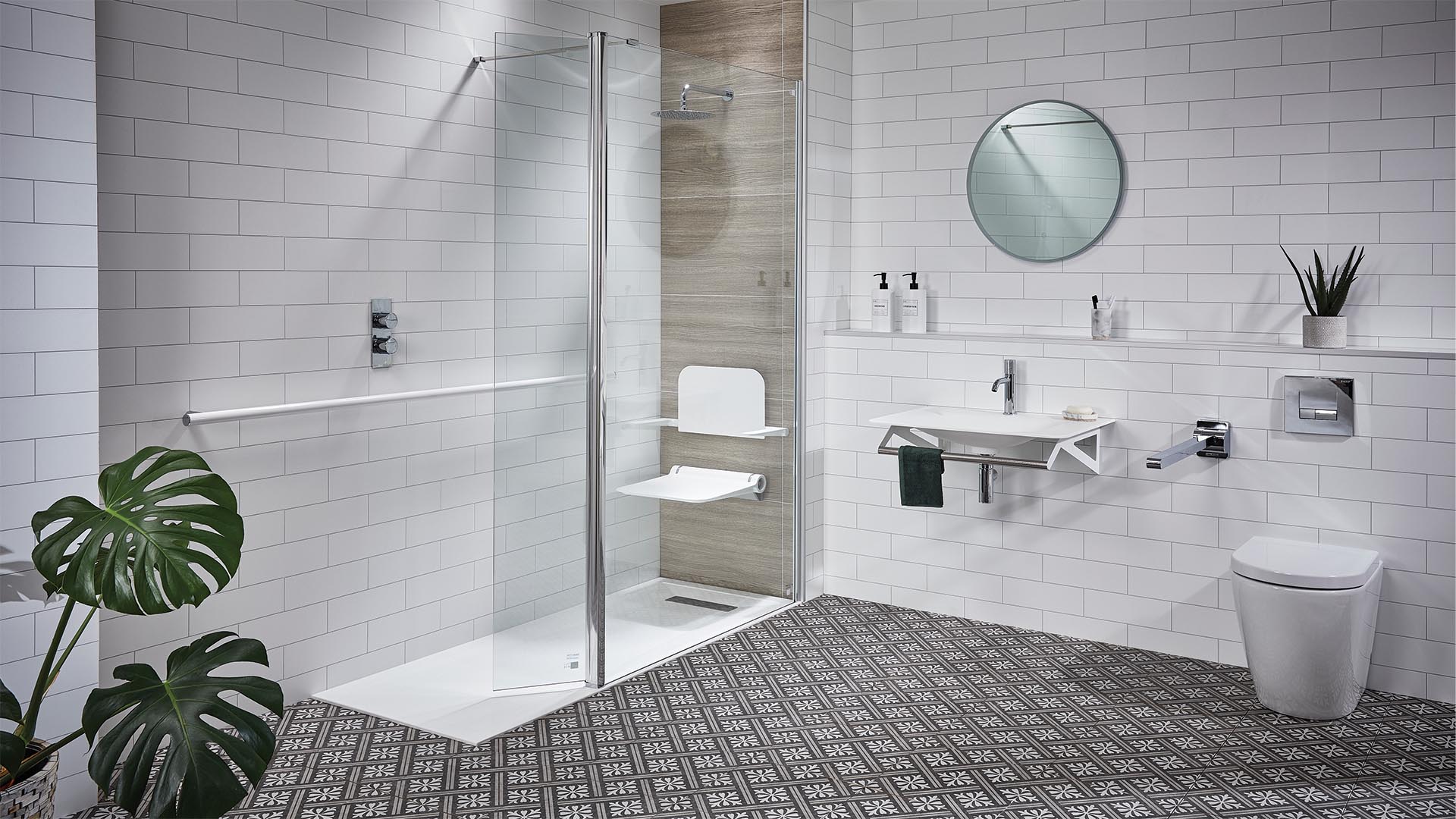
Understanding Non-Slip Tiles
What are Non-Slip Tiles?
Non-slip tiles are tiles manufactured or finished to provide extra traction when walked on, particularly in wet areas such as showers, wet rooms and around baths. Instead of a very smooth, glossy surface, they usually have a matte or lightly textured finish that increases friction between the tile and the sole of the foot or shoe.
Common options include:
- Matte finishes.
- Textured finishes.
- Structured glazes.
The key is to balance safety with comfort, so tiles feel secure without becoming uncomfortable to stand on or difficult to keep clean.
Tile Slip Ratings Explained (R-Ratings and PTV Values)
To make comparisons easier, tiles are tested for slip resistance. Two common measures are used:
- R ratings (R9-R13). These are based on how slip-resistant a tile is when walked on at increasing angles on a sloped ramp.
- R9 – relatively low slip resistance. Usually suitable only for dry areas.
- R10-R11 – common in domestic bathrooms and many wet areas.
- R12-R13 – higher slip resistance. Often used where surfaces are frequently wet or in more demanding environments.
- PTV (Pendulum Test Value). In the UK, the pendulum test is widely used to assess slip risk. Results are given as a PTV. In general:
- Values under 24 suggest a higher slip risk.
- Values around 25-35 indicate a moderate level of slip resistance.
- Values above 36 are often recommended for wet areas where good slip resistance is needed.
For mobility-focused bathrooms and wet rooms, it is sensible to look for tiles with robust slip ratings suitable for wet, barefoot use, particularly in and around showers.
Best Tile Types for Mobility Bathrooms
Porcelain Tiles
Porcelain is a popular choice for mobility bathrooms and wet rooms because it is dense, durable and highly water-resistant. Many porcelain ranges are specifically designed for floor use and come with non-slip surface options and clear slip ratings.
Advantages
- Excellent durability and low porosity.
- Wide choice of colours, sizes and textures.
- Suitable for level-access showers and wet room floors when correctly specified and installed.
Considerations
- Heavier than some alternatives, so professional fitting is essential.
- Rougher textures can require a little more attention to cleaning.
Ceramic Tiles
Ceramic tiles are widely used for bathroom tiles, especially on walls. They can also be suitable for light-use floors if they are specifically rated for that purpose. They are often more budget-friendly than porcelain.
Advantages
- Good for walls and splashbacks.
- Easy to clean and available in a wide range of finishes.
Considerations
- Not all ceramic tiles are suitable for floors, especially in wet zones.
- Floor-grade, non-slip options should be used wherever the surface gets wet regularly.
Vinyl Tiles and Alternatives
Slip-rated vinyl flooring and modular vinyl tiles are often used in wet rooms and mobility bathrooms. They offer a slightly softer, warmer feel underfoot, which can be more comfortable for people with joint pain.
Advantages
- Comfortable, with some cushioning and warmth.
- Often supplied with built-in slip resistance.
- Fewer grout lines, which can make cleaning easier.
Considerations
- Needs correct preparation and professional fitting.
- Can be more prone to marking from wheelchairs, stools or some cleaning products.
Natural Stone Tiles
Natural stone, such as slate or textured limestone, can offer a tactile, high-end finish with good natural grip when correctly chosen and treated.
Advantages
- Attractive, timeless appearance.
- Many stones have an inherent texture that supports slip resistance.
Considerations
- Usually require sealing.
- Some surfaces can become smoother over time if heavily worn.
Quick Comparison
| Tile type | Typical use | Slip resistance options | Maintenance level |
| Porcelain | Floors, wet rooms, walls | Wide (including high-grip) | Low to moderate |
| Ceramic | Walls, some floors | Limited floor options | Low |
| Vinyl/safety | Wet rooms, level access floors | Built-in slip resistance | Low to moderate |
| Natural stone | Floors, feature walls | Good when textured | Moderate to high (sealing required) |
Tile Recommendations by Bathroom Area
Floor Tiles
Bathroom floors, especially showering and wet room zones, are the highest priority for non-slip tiles. Look for tiles with suitable slip ratings for wet, barefoot conditions. Smaller format tiles or mosaics can help because the extra grout lines can add grip and make it easier to create safe gradients towards floor drains.
In a wet room, continuous slip resistance is essential from the main shower area to the rest of the floor. Avoid mixing very smooth tiles in wet zones with more textured ones next to them, as the change in texture can be disorientating.
Wall Tiles
Wall tiles do not need the same level of slip resistance as floors, but they still affect safety and comfort. Smooth, easy-to-clean wall tiles help keep the bathroom hygienic and reduce maintenance.
Consider using contrasting colours between walls, floors and fixtures to help users with reduced vision distinguish edges and surfaces more easily.
Shower and Wet Room Zones
In shower enclosures and full wet rooms, consistent slip resistance, good drainage and a neat, continuous look are the key priorities. Non-slip floor tiles should be combined with gentle gradients to guide water towards the drain, avoiding pooling that could create hazards.
Using the same or coordinating tiles on the main floor and in the shower area helps the space feel cohesive while maintaining the right performance for wet conditions.
Practical and Aesthetic Considerations
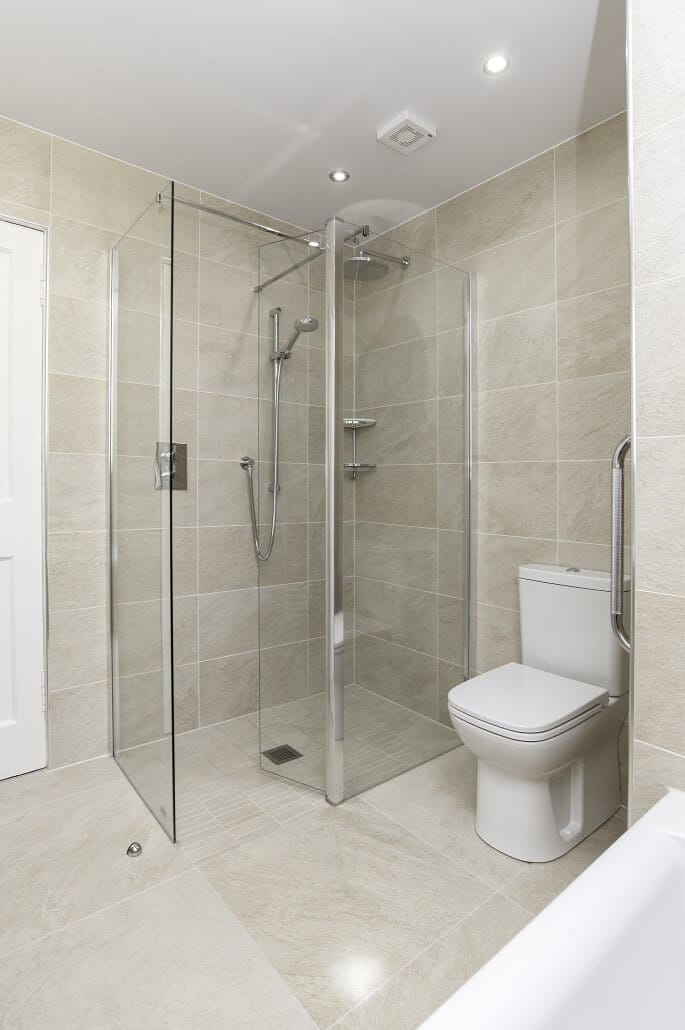
Non-slip does not have to mean dull. Tile size, tone and layout can all influence how spacious and welcoming a bathroom feels. Larger tiles can reduce grout lines and create a more contemporary look, while smaller tiles are often useful in areas that need more shaping and fall to drains.
Colour and pattern can also help with orientation and comfort. Soft, mid-tone shades tend to feel warmer and can show water spots less than very dark or very light tiles. If cold floors are a concern, underfloor heating or high-quality safety vinyl can improve comfort without sacrificing safety.
Expert Installation Tips for Non-Slip Tiles
Even the best non-slip tiles will not perform as intended if they are not installed correctly. Gradients must be carefully planned so water drains efficiently, particularly in wet rooms and level-access showers. Poorly managed slopes can lead to puddles, which increase slip risk and make cleaning harder.
Using suitable adhesives and grouts designed for wet environments is essential, as is ensuring joints are properly sealed. Working with experienced installers who understand mobility-focused bathrooms helps ensure safety, drainage and aesthetics all come together as planned.
Maintaining Your Non-Slip Tiles
Regular maintenance will help keep your tiles safe and looking their best. Mild, non-abrasive cleaners are usually recommended; harsh chemicals, waxes or polishes can fill in surface texture and reduce the effectiveness of non-slip finishes.
Keeping grout lines clean is also important, as soap scum or limescale buildup can become slippery. Periodic checks for wear, especially in areas where mobility aids, stools or wheelchairs are used, allow you to spot any damage or smoothing of the surface early and take action if needed.
Choosing Tiles with Bathing Mobility Advisory Service
The right non-slip tiles are a crucial part of any safe, comfortable mobility bathroom. They support secure footing in wet conditions, help prevent slips and falls, and contribute to a room that feels reassuring as well as stylish.
Matching tile type, finish and slip rating to each area, from main floors to level-access showers and wet rooms, ensures your space works for your specific needs. BMAS has extensive experience designing wet rooms and mobility bathrooms tailored to different homes, tastes and levels of mobility.
Our team can help you choose high-quality non-slip tiles that complement your bathroom design while prioritising safety and ease of use. To discuss ideas for your own accessible bathroom or wet room, get in touch to book your free design consultation.