

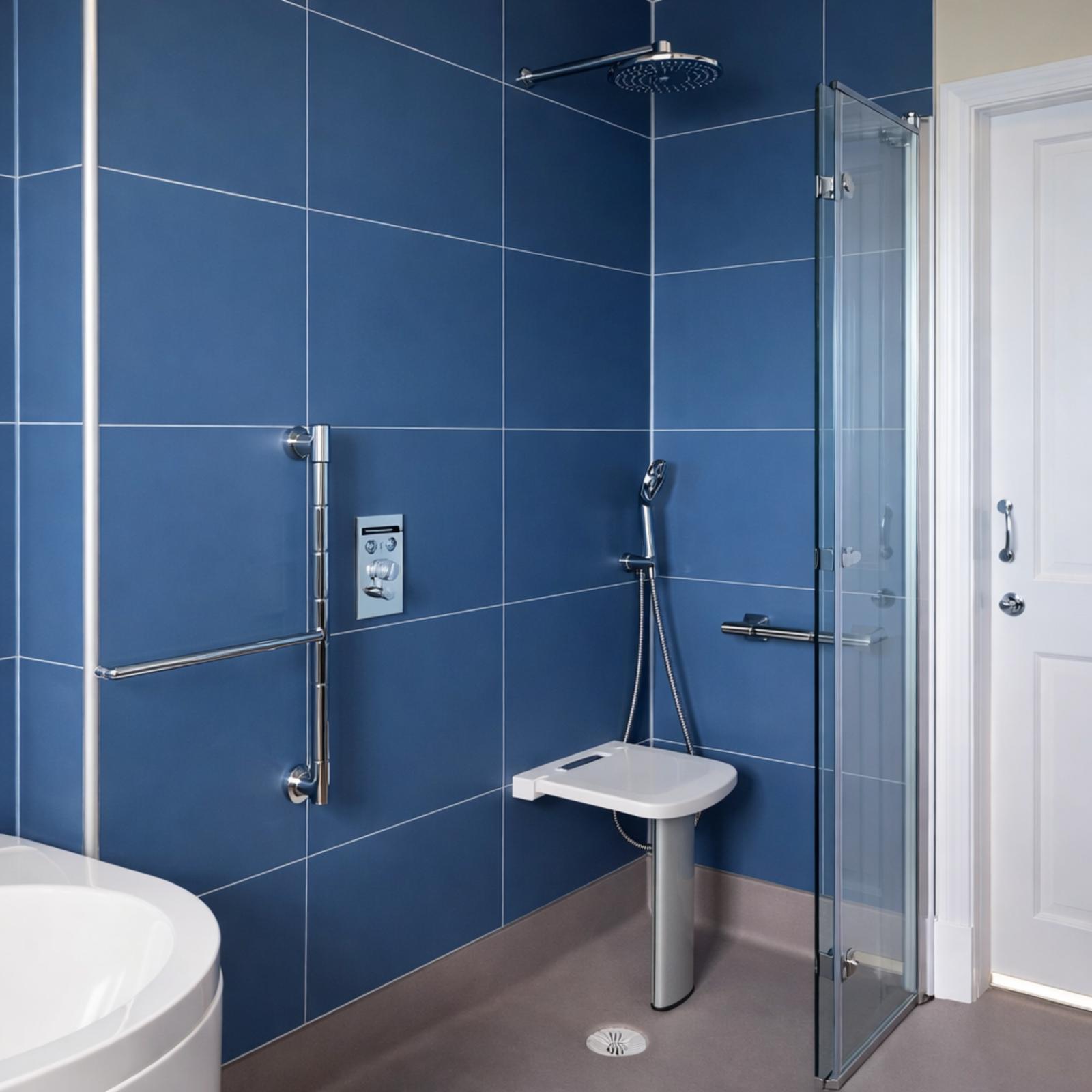
A wet room is a fully waterproofed, level access shower space with no step, tray or lip to climb over. For anyone with limited mobility, that layout can mean washing independently rather than needing help every time, but only if it’s built with proper wet room safety features from the start.
Get the design wrong and a wet room brings its own hazards: slippery flooring, nothing to hold onto, water spreading where it shouldn’t. Falls on wet, slippery surfaces are a common cause of injury in the home, particularly for older or disabled people, so the safety details matter as much as the look. This article covers the features that make the biggest difference, from flooring and grab rails to seating, screens, and a few extras worth not overlooking.
Why Safety Matters in a Disabled Wet Room
A well designed wet room is about more than avoiding accidents. It’s about washing without waiting for someone else, and without feeling anxious each time you step in, which protects both independence and dignity.
Poorly designed wet rooms tend to fail in the same few ways: flooring too smooth once wet, nothing sturdy to hold onto, water pooling because the drainage gradient is wrong, or lighting too dim to see the floor. Any one of these is a risk on its own; together they add up to a genuinely dangerous room.
There’s a regulatory angle too. Part M of the Building Regulations covers access to and use of buildings, including sanitary accommodation and wheelchair accessible shower facilities in non-domestic settings, as set out in Approved Document M. It doesn’t cover private renovations, but it’s a useful benchmark for the clearances an accessible wet room should aim for.
Non-Slip Wet Room Flooring: The Foundation of Safety
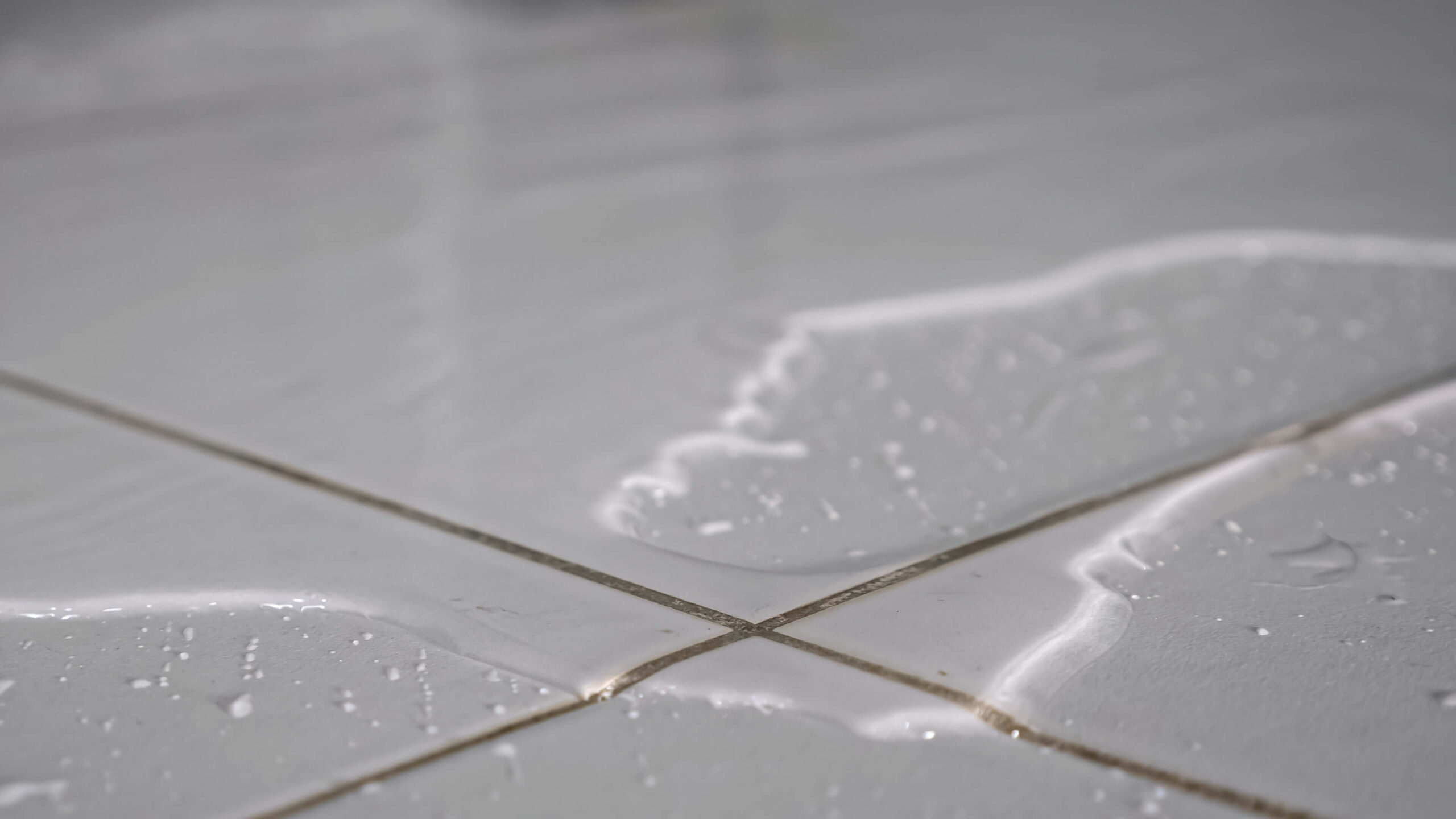
Flooring is where wet room safety starts. Everything else, from grab rails to seating, exists to support a floor that shouldn’t be slippery in the first place.
Types of Non-Slip Flooring
Vinyl safety flooring is the most common choice: warm underfoot and made specifically for slip resistance. Textured tiles get their grip from a raised or grainy surface, though grout lines need careful sealing so they don’t trap water. Rubber flooring gives good grip and a softer landing if someone falls, but needs proper installation for drainage.
Key Features to Look For
Slip resistance is measured using ramp tests such as DIN 51130, which rates flooring from R9 up to R13 by the angle at which a surface stays safe to walk on when wet or oiled. As Slip-Not explains, R10 suits general wet areas, while R11 and above are rated for consistently wet conditions, the bracket most wet rooms should sit in. A cushioned surface helps reduce injury from a fall, and the floor needs to fall evenly towards the drain so water doesn’t pool underfoot.
Maintenance and Hygiene
A safety floor only stays safe if it’s kept clean. Textured surfaces can hold onto soap residue, so an easy-clean finish matters, along with mould and mildew resistance since a mouldy floor is often a slippery one.
Grab Rails: Essential Support and Stability
Grab rails are one of the simplest additions to a wet room and one of the most effective, giving a fixed, reliable point of support exactly where it’s needed.
Where to Install Grab Rails
The shower area is the priority, positioned so a rail can be reached both standing and seated. A rail beside the toilet helps when sitting down and standing up, often the moment people feel least steady, and rails along the route through the room help with general movement.
Types of Grab Rails
Straight rails are the standard fixed handhold. Angled rails combine a horizontal and vertical section to suit sitting or standing. Fold-down rails hinge out of the way when not needed, useful where space is tight or a wheelchair user needs a clear run through.
Choosing the Right Grab Rails
Weight capacity matters more than it might seem: a rail needs to safely take a person’s full weight if they lean or fall against it, which depends on the rail and how securely it’s fixed to the wall. A textured, non-slip grip helps with wet or soapy hands, and colour contrast against the wall makes the rail easy to spot for anyone with a visual impairment.
Wet Room Shower Seats for Comfort and Accessibility
Standing for the full length of a shower isn’t realistic for everyone, and a seat turns a wet room from merely accessible into genuinely comfortable to use.
Types of Shower Seats
Wall-mounted fold-down seats are space-efficient and flip up when not in use. Freestanding shower chairs offer more flexibility and can be moved without building work. Adjustable-height seats suit households where more than one person uses the room, or where needs may change.
Benefits of Shower Seating
A seat reduces fatigue for anyone who tires quickly or struggles to balance while standing, and lowers fall risk by removing the demands of standing on a wet surface. For anyone with significant mobility limitations, it can be what makes washing independently possible at all.
What to Consider When Choosing a Seat
Weight capacity needs checking and matching to the user, as with grab rails. Padding should add comfort but dry quickly, since anything that stays damp becomes a hygiene problem, and good drainage underneath the seat matters too, so water runs away rather than sitting against the skin.
Wet Room Shower Screens: Containing Water Safely
A shower screen has one main job: keeping water where it belongs, rather than spreading it across a floor someone then has to walk over.
Why Shower Screens Matter
Without a screen, water can travel further than expected, especially with a hand-held shower head, turning a wider area of the room into a slip hazard. A well positioned screen keeps the wet zone contained and the rest of the floor dry underfoot.
Types of Wet Room Shower Screens
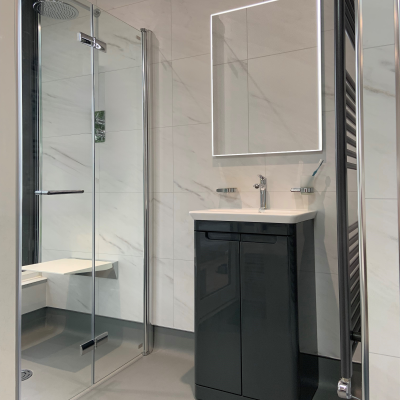
Fixed glass panels give a permanent, low-maintenance barrier. Hinged or movable screens offer more flexibility for wheelchair access or carer assistance. Half-height screens are a popular middle ground, containing splashback while leaving the space open for a wheelchair or shower chair.
Safety Features to Look For
Toughened safety glass is essential, since it breaks safely rather than into sharp shards. Easy-clean coatings reduce limescale build-up, which otherwise makes glass harder to see and grip, and minimal framing keeps the opening as wide as possible for a wheelchair.
Additional Wet Room Safety Features to Consider
Beyond the main fixtures, a handful of smaller features often make the biggest practical difference day to day.
Anti-Scald Thermostatic Controls
A thermostatic mixing valve keeps water at a set temperature and cuts off if the cold supply fails, preventing sudden scalding. Domestic TMV2 valves suit most home wet rooms, while TMV3 valves are built to a higher standard and required in healthcare and care settings, as Legionella Control International explains. For anyone with reduced sensation or slower reaction times, this is one of the more important, if less visible, features.
Adequate Lighting
Bright, glare-free lighting makes it far easier to judge floor conditions and spot spills. Motion-sensor lighting is useful for anyone who might struggle to reach a switch.
Level Access and Drainage
A flush, step-free floor is what makes a wet room usable for wheelchair users. That flat surface depends on efficient drainage built into the gradient, so water clears rather than pooling.
Emergency Alarms and Call Systems
A pull cord or wireless alert lets someone call for help quickly if they fall or feel unwell, giving genuine peace of mind to the user and any carers supporting them.
Designing a Safe Wet Room for Long-Term Use
Mobility needs rarely stay the same for years, so it’s worth designing with room to adapt, such as reinforced walls that can take extra grab rails later.
Professional installation matters more here than in almost any other room. Get the drainage fall wrong, or fit a rail into a wall that can’t take the load, and a safety feature becomes a hazard. It’s worth having the room assessed and fitted by people experienced in accessible bathing, who can advise on which features suit the individual.
A purpose-built wet room with professionally fitted safety features tends to serve someone well for years, without needing revisiting every time their needs shift.
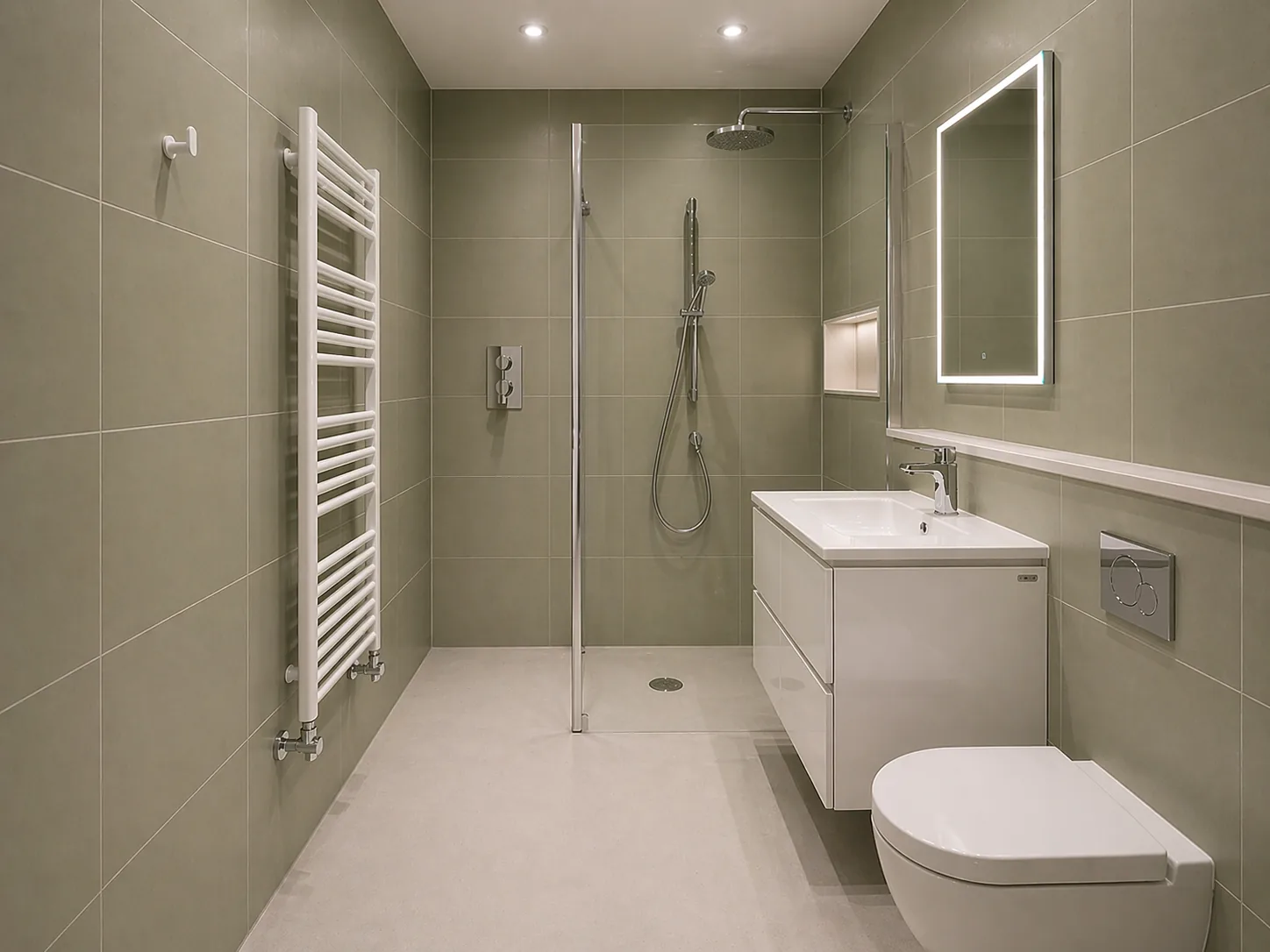
No single feature makes a wet room safe on its own. Non-slip flooring, well positioned grab rails, a suitable shower seat, a properly fitted screen, and details like thermostatic controls and good lighting work together, and that combination is what reduces risk day to day.
Done well, a wet room gives someone back independence and comfort that a poorly designed bathroom can’t offer, along with the peace of mind of knowing the space was built around their needs. If you’re planning one, it’s worth talking to our specialists at BMAS who can assess the space and recommend the right features for the person using it.